Systema RoboticaSystema Robotica

[^1][^2][^3]

[^4][^5][^6]

[^7]

“We regret deeply that our knowledge both of natural history and of machinery is too small to enable us to undertake the gigantic task of classifying machines into the genera and sub-genera, species, varieties and sub-varieties, and so forth…We can only point out this field for investigation…”

[^8]Do they deserve to be defined by biological markers? How can we differentiate between a mechanical android versus one with synthetic skin? Are robots simply advanced machines that serve as tools for humanity? Will they eventually join the fabric of human society as our agents, advisors, assistants, maids, nurses, and partners? Will they be our servants, equals or superiors? Will we merge with them to become human-robot hybrids? When robots become superintelligent will they be regarded as sentient? How can we even define sentience? What is a robot?

  1. Natura Robotica
  2. Structura Robotica
  3. Futura Robotica
I

Natura Robotica

“You just can’t differentiate between a robot and the very best of humans.” ― Isaac Asimov, I, Robot

I, Robot

1

Defining a robot

A robot is an artificial material construct designed to autonomously sense, decide, and operate within the physical world.

“A robot is anartificial**material…”

“…artificialmaterial construct**designed to…”

“…material constructdesigned**to autonomously…”

“…toautonomously**sense, decide, and…”

“…autonomouslysense, decide and operate**within…”

“…operate within thephysical world**.”

2

Robots vs. machines

Water Sprinkler

Exoskeleton Suit

Telepresence Kiosk

3

Robots vs. AI

Artificial intelligence is intuitive cognition in an engineered construct.

[^9][^10][^11]

4

Robots vs. humans

[^12]

Humans are born¹³ through biological means, while robots are constructed¹⁴ entities.

5

Robots vs. cyborgs

[^15]

A cyborg is a human that has undergone invasive internal augmentation using neural, biological, or electronic implants to irreversibly enhance or exceed baseline biological functions.

[^16]

[^17][^18]

II

Structura Robotica

“They’re machines…They look like people, but they’re machines.” ― Philip K. Dick, Second Variety

Second Variety

6

Evolutionary realms

[^19]

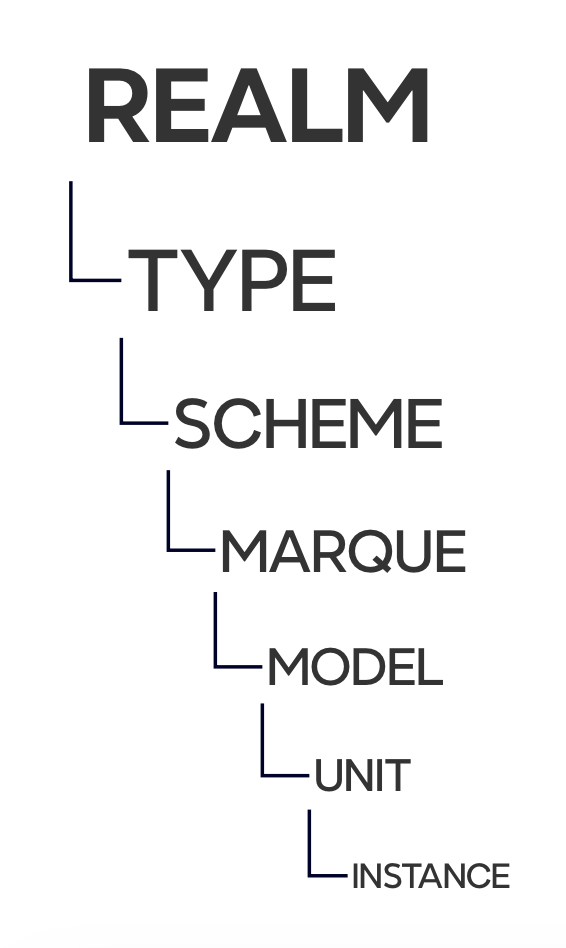
  1. Kingdom = Realm
  2. Class = Type
  3. Order = Scheme
  4. Genus = Marque
  5. Species = Model
  6. Specimen = Unit
  7. Instance

ImageImage

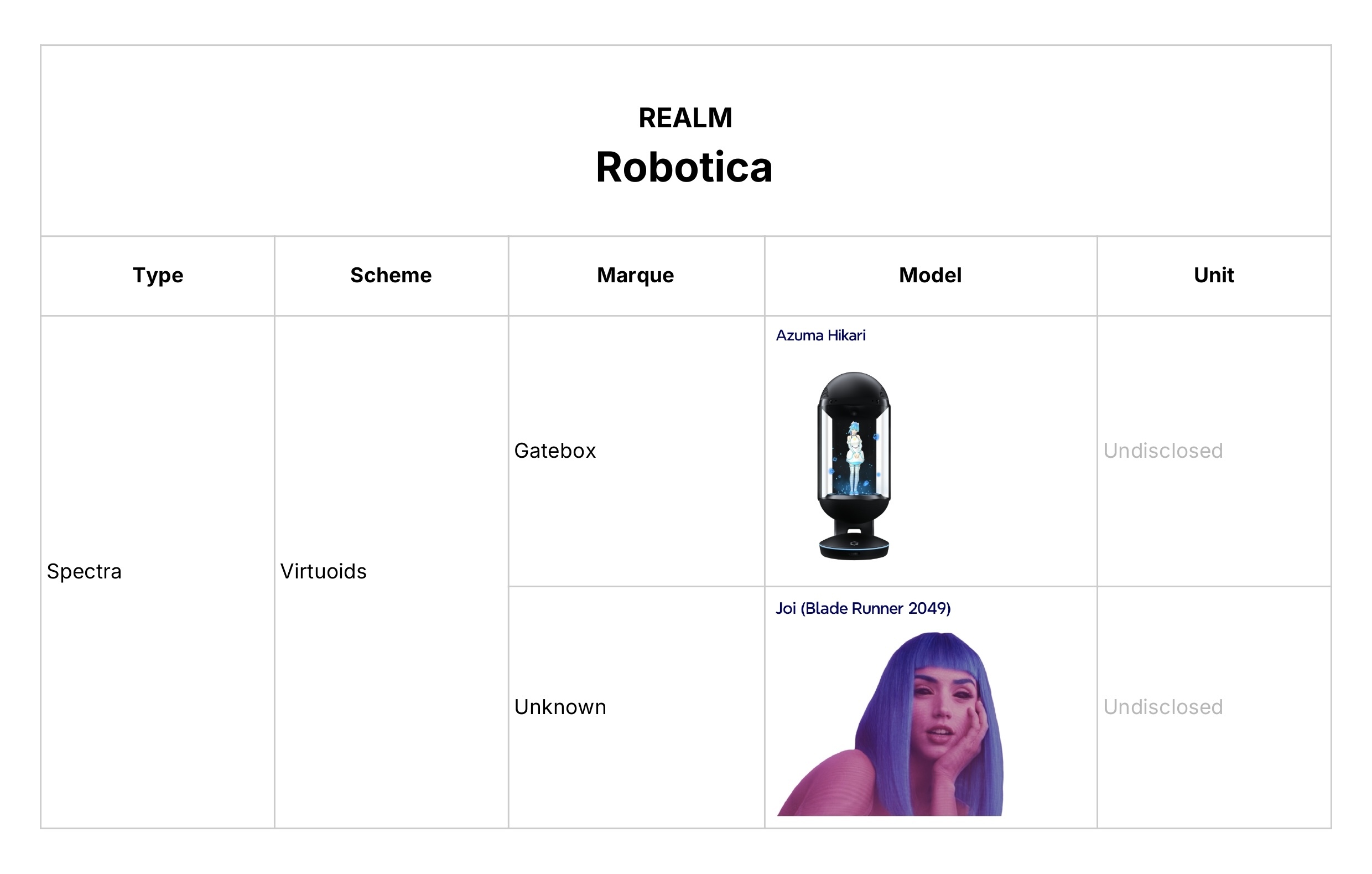
Figure 1

ImageImage

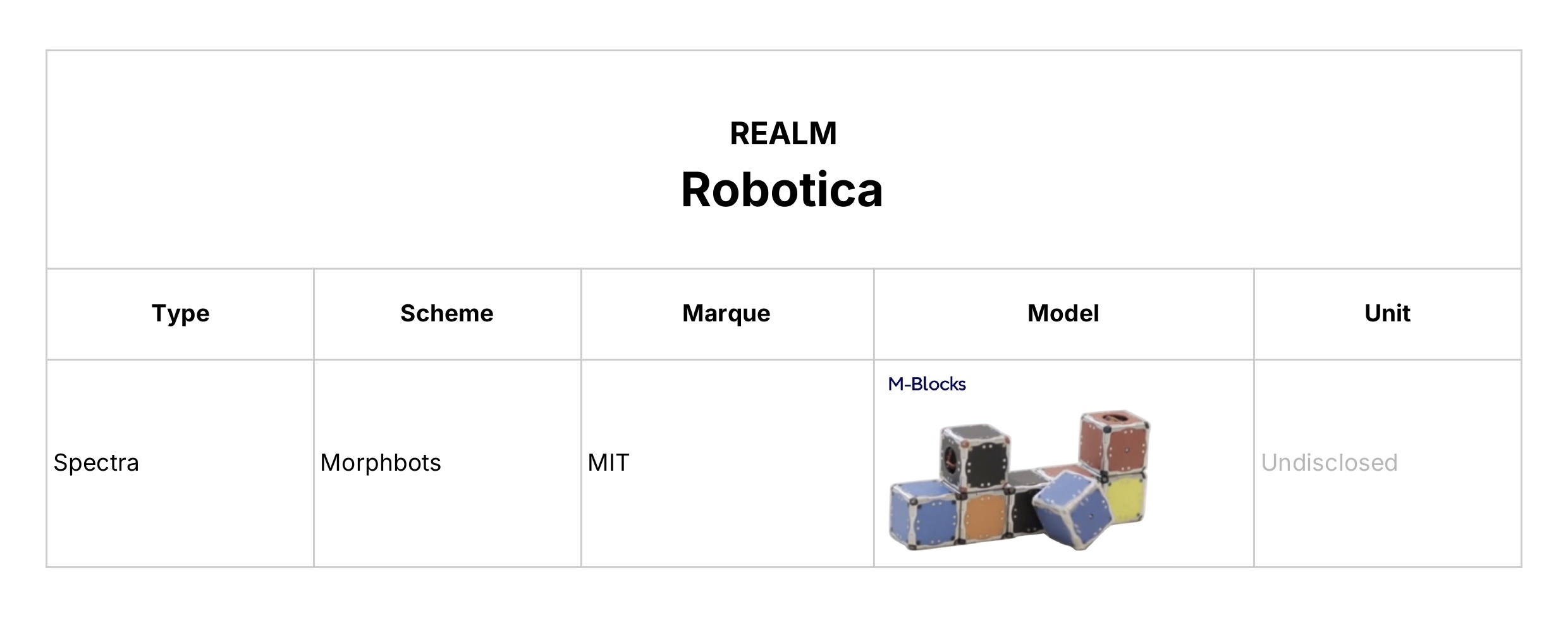
Figure 2

[20][21]

7

Principles of classification

[^22]

Designform refers to the structure, appearance, countenance, size and branding of an engineered material construct.

8

Taxonomic architecture

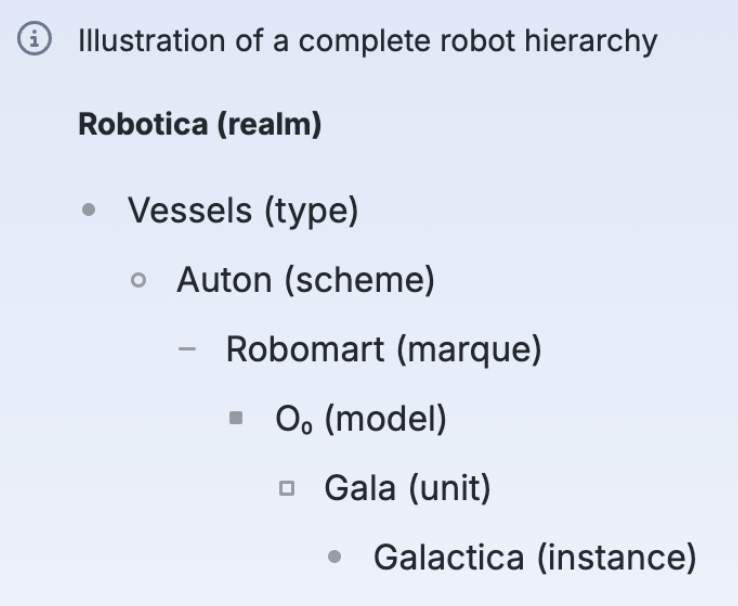
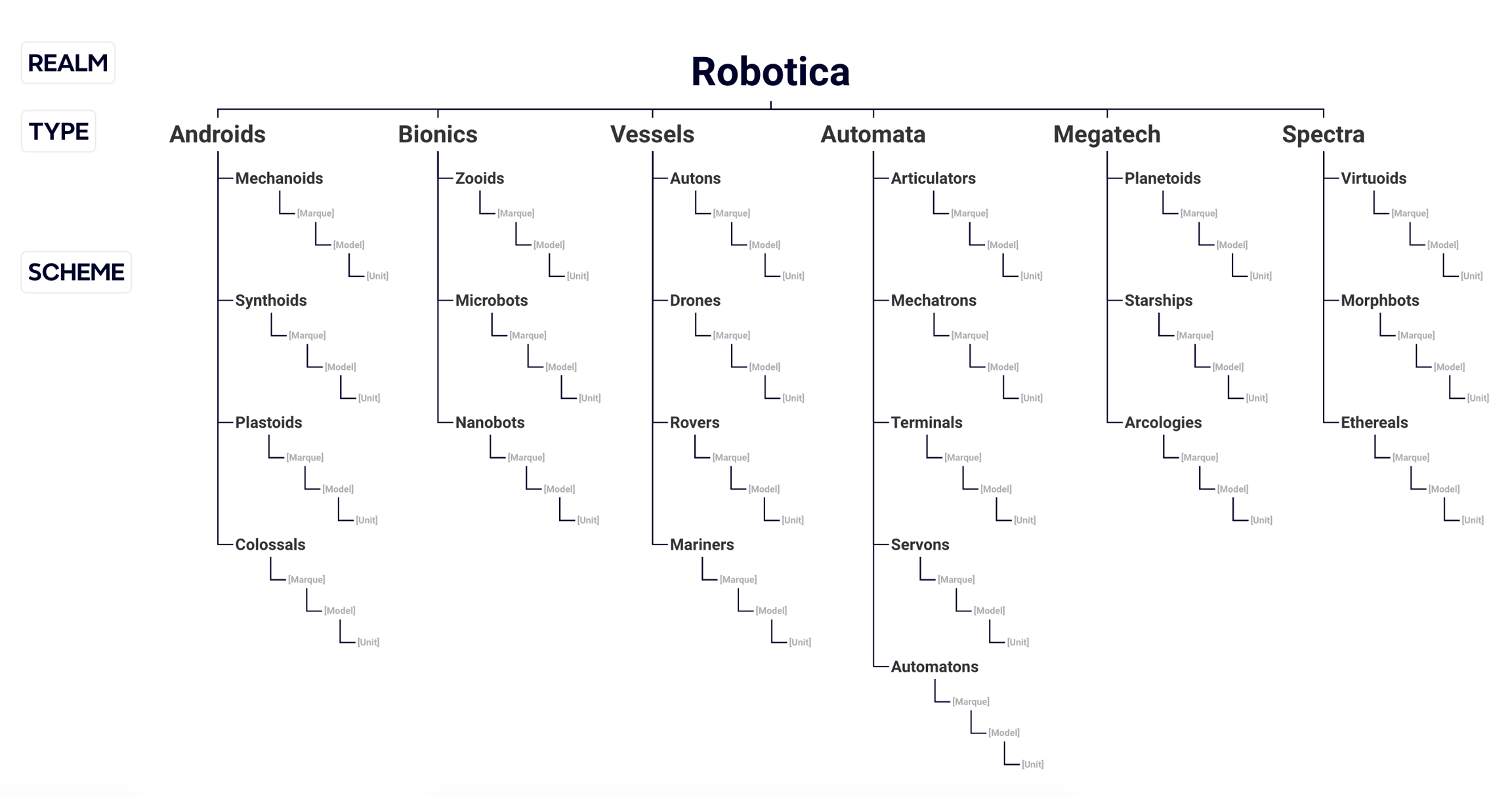
Realm: Robotica

Type: the main classes of robots within robotica with distinct designform

  1. Androids
  2. Bionics
  3. Vessels
  4. Automata
  5. Megatech
  6. Spectra

Scheme: the subdivision of a robot type based on schematic designform

Androids

  1. Mechanoids
  2. Synthoids
  3. Plastoids
  4. Colossals

Bionics

  1. Zooids
  2. Microbots
  3. Nanobots

Vessels

  1. Autons
  2. Drones
  3. Mariners
  4. Rovers

Automata

  1. Articulators
  2. Mechatrons
  3. Terminals
  4. Servons
  5. Automatons

Megatech

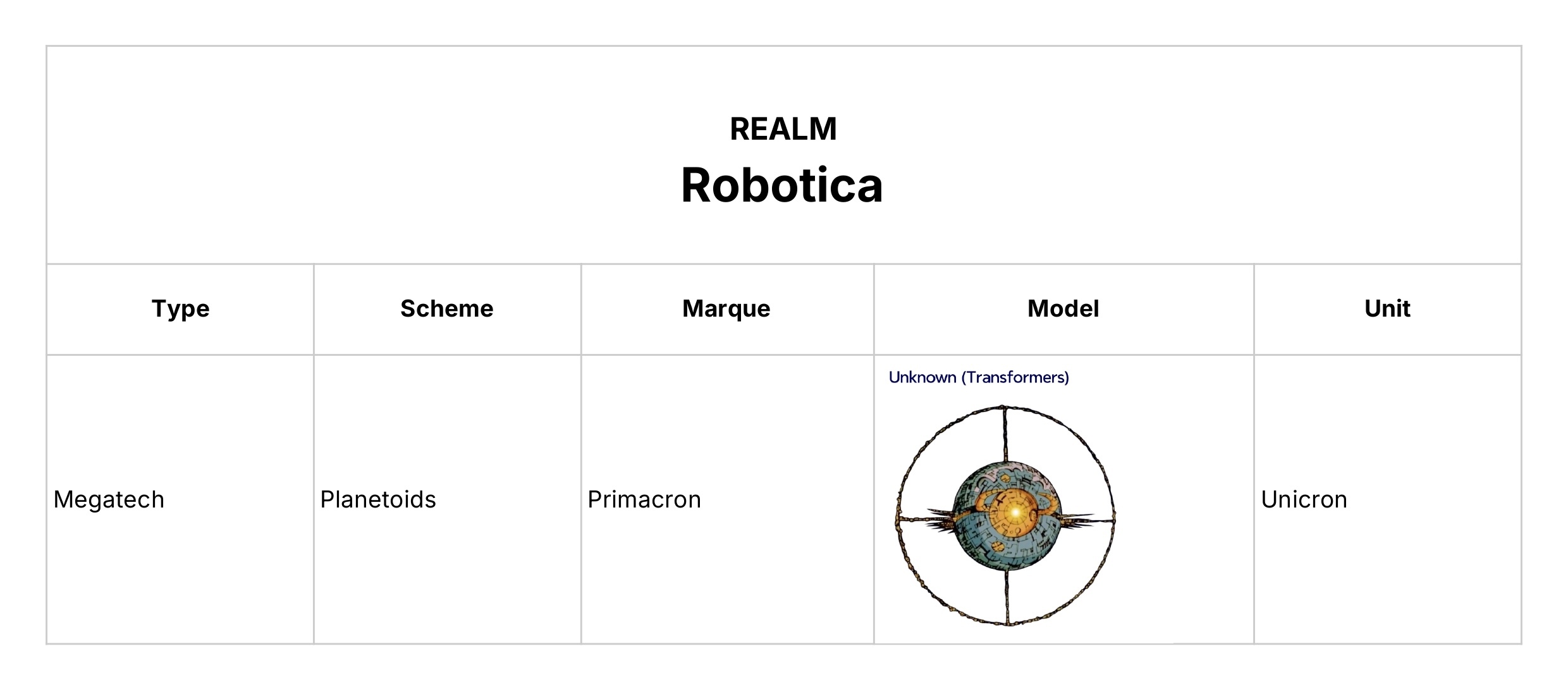
  1. Planetoids
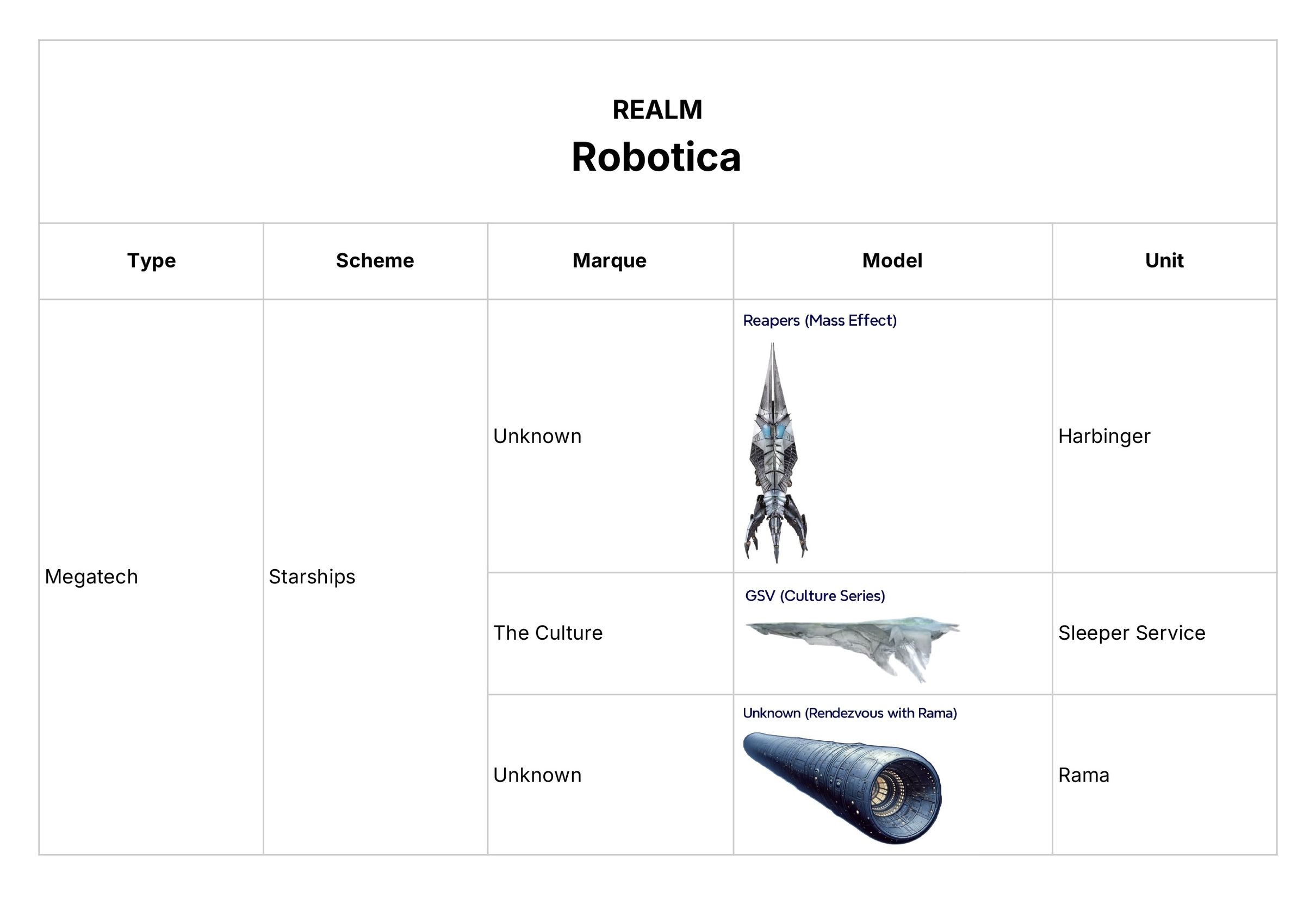
  2. Starships
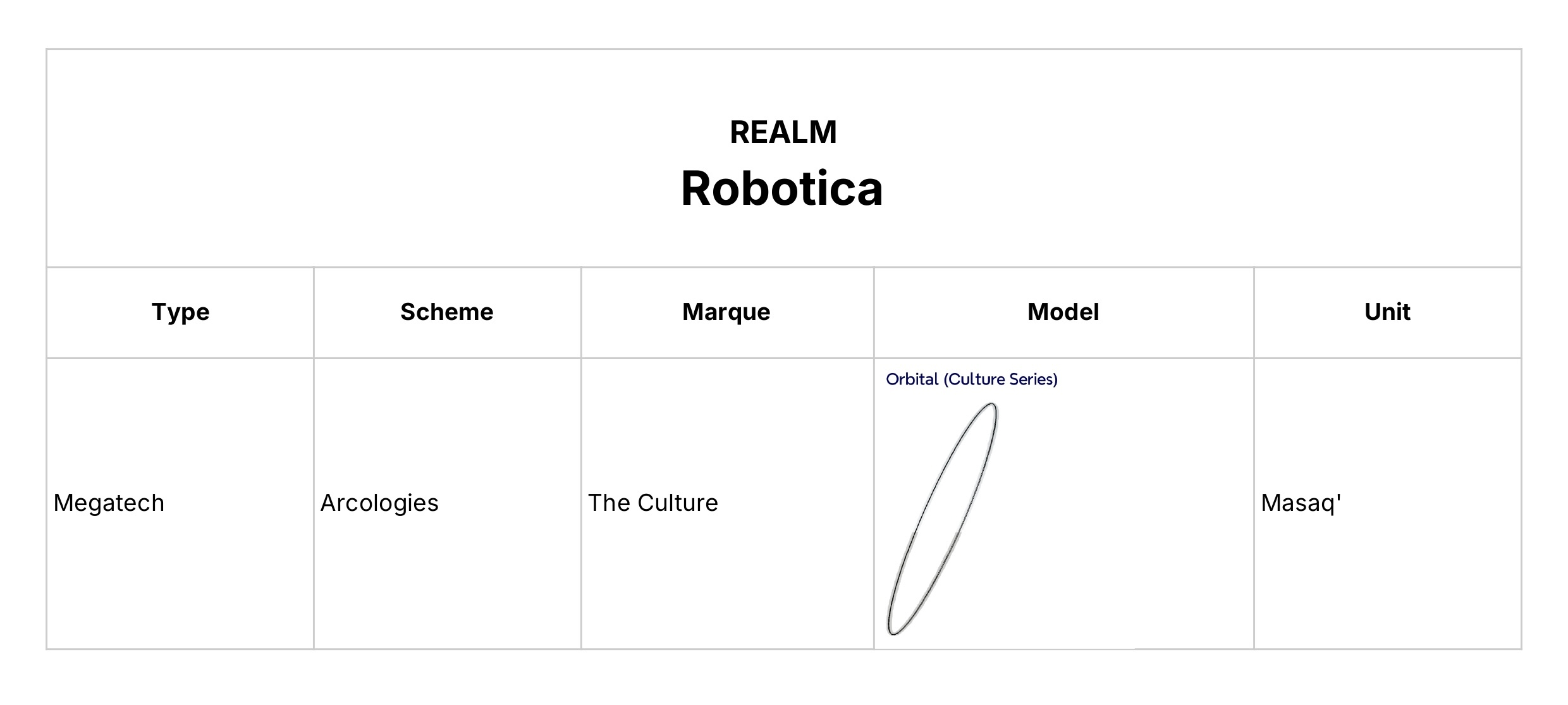
  3. Arcologies

Spectra

  1. Virtuoids
  2. Morphbots
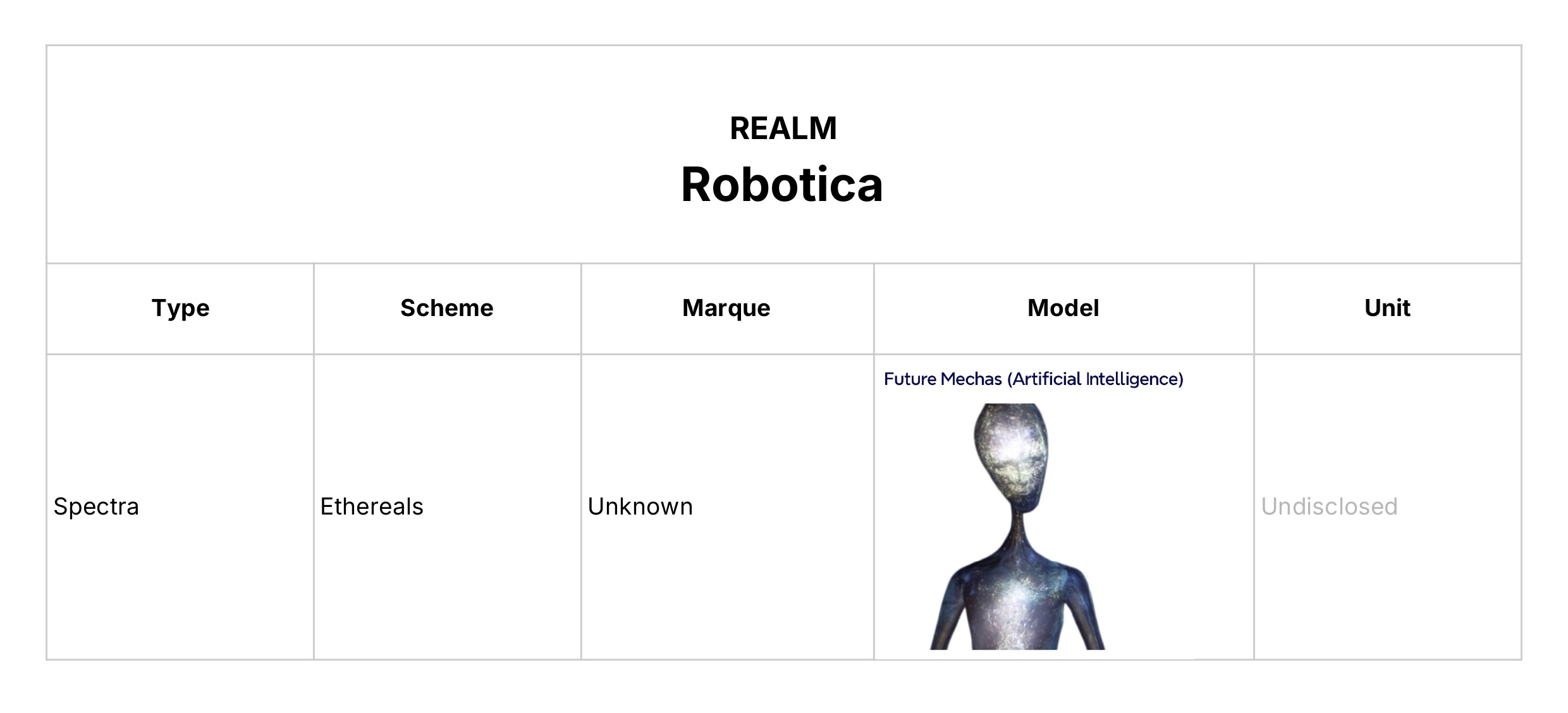
  3. Ethereals

Marque: the top-level brand of a robot series with specified designform

Prime Architect

Proprietor

Model: the version of a robot within a marque with unique designform

  • Android
  • Bionics
  • VesselsMars 2020 Rover
  • Automata
  • Megatech:Unicron
  • Spectra:

Unit: the individual robot within a model based on identifiable name or serial #

Instance: the singular activated presence within a unit

[^23]

ImageImage

Figure 3

9

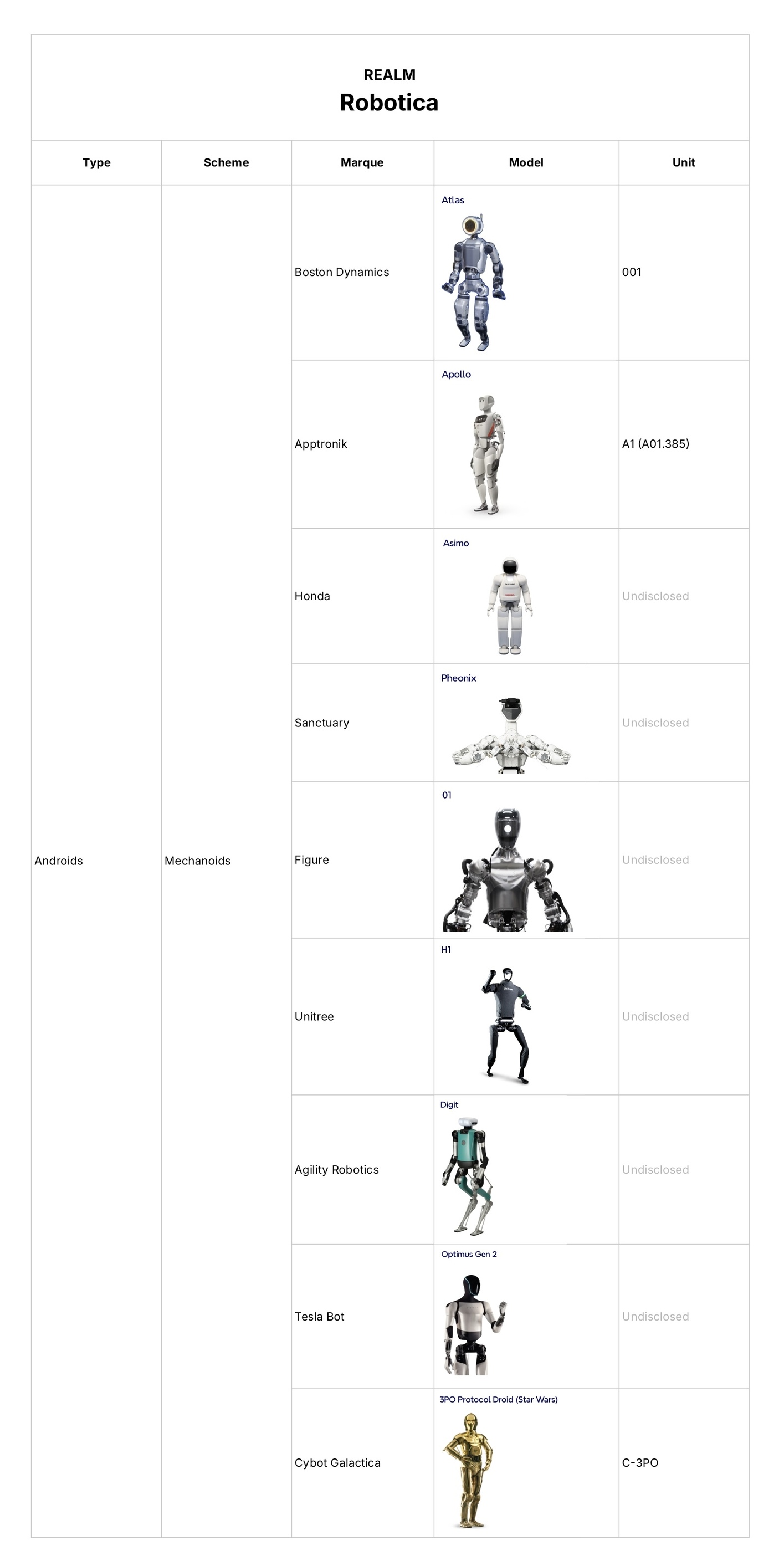
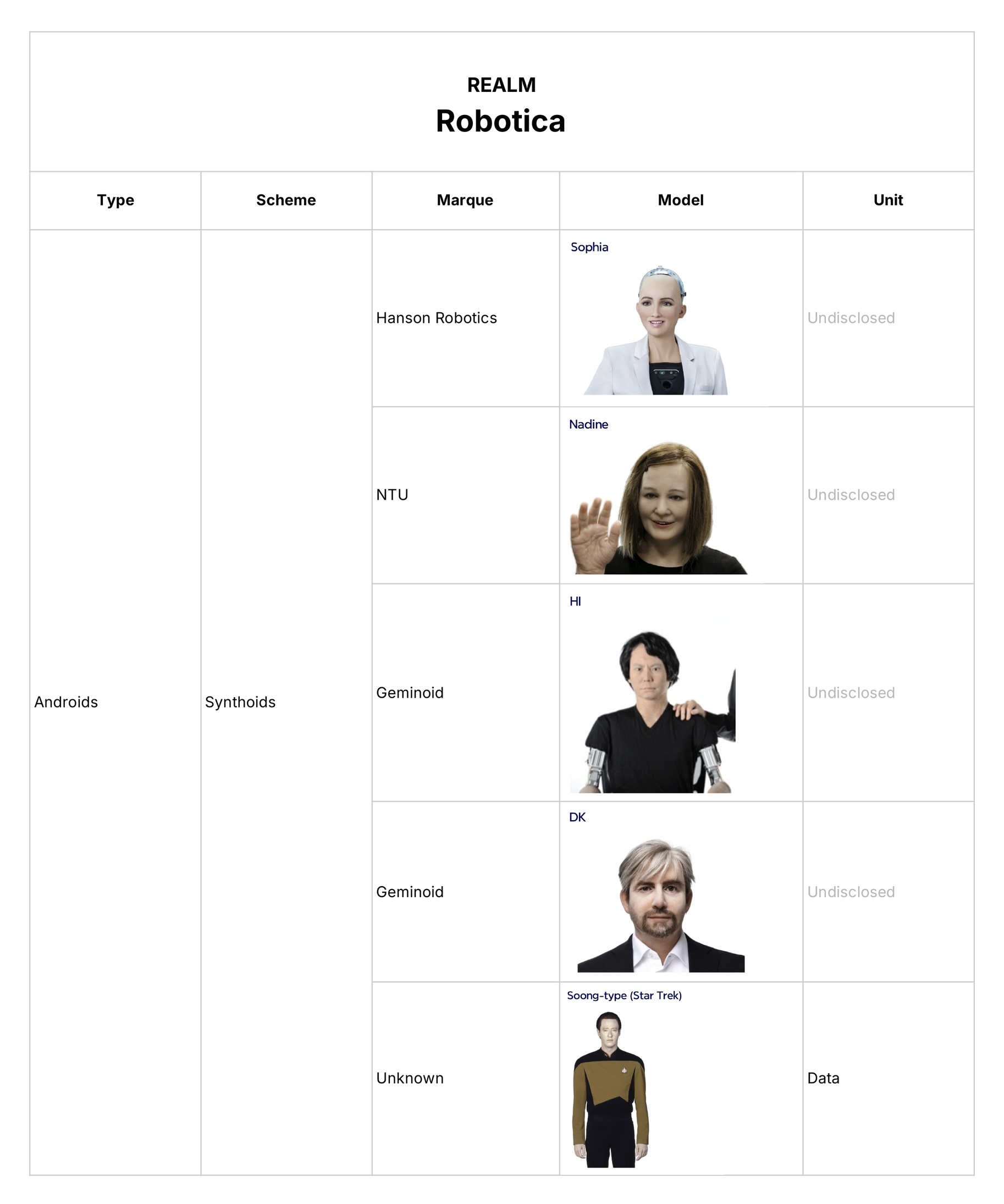
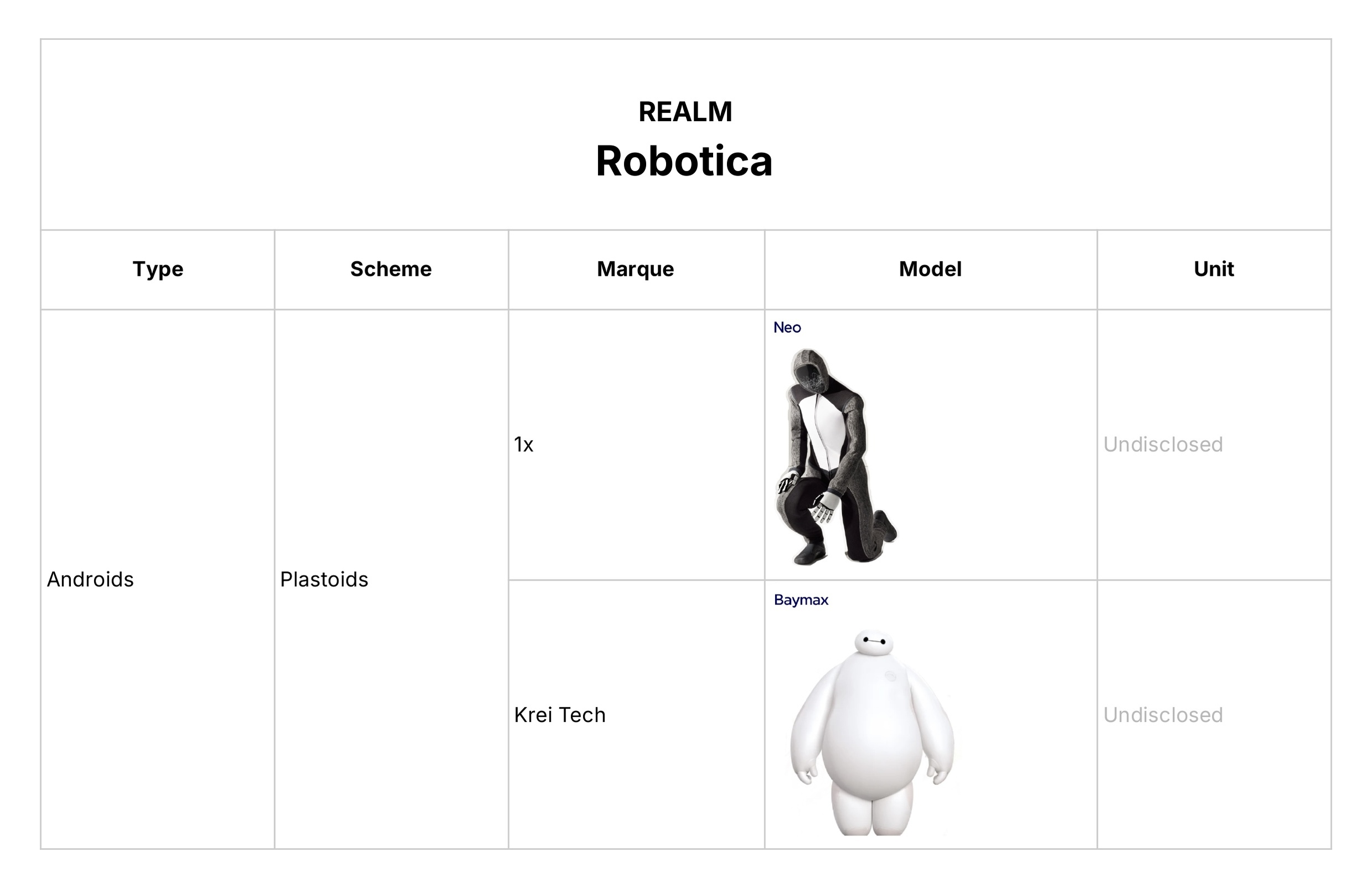
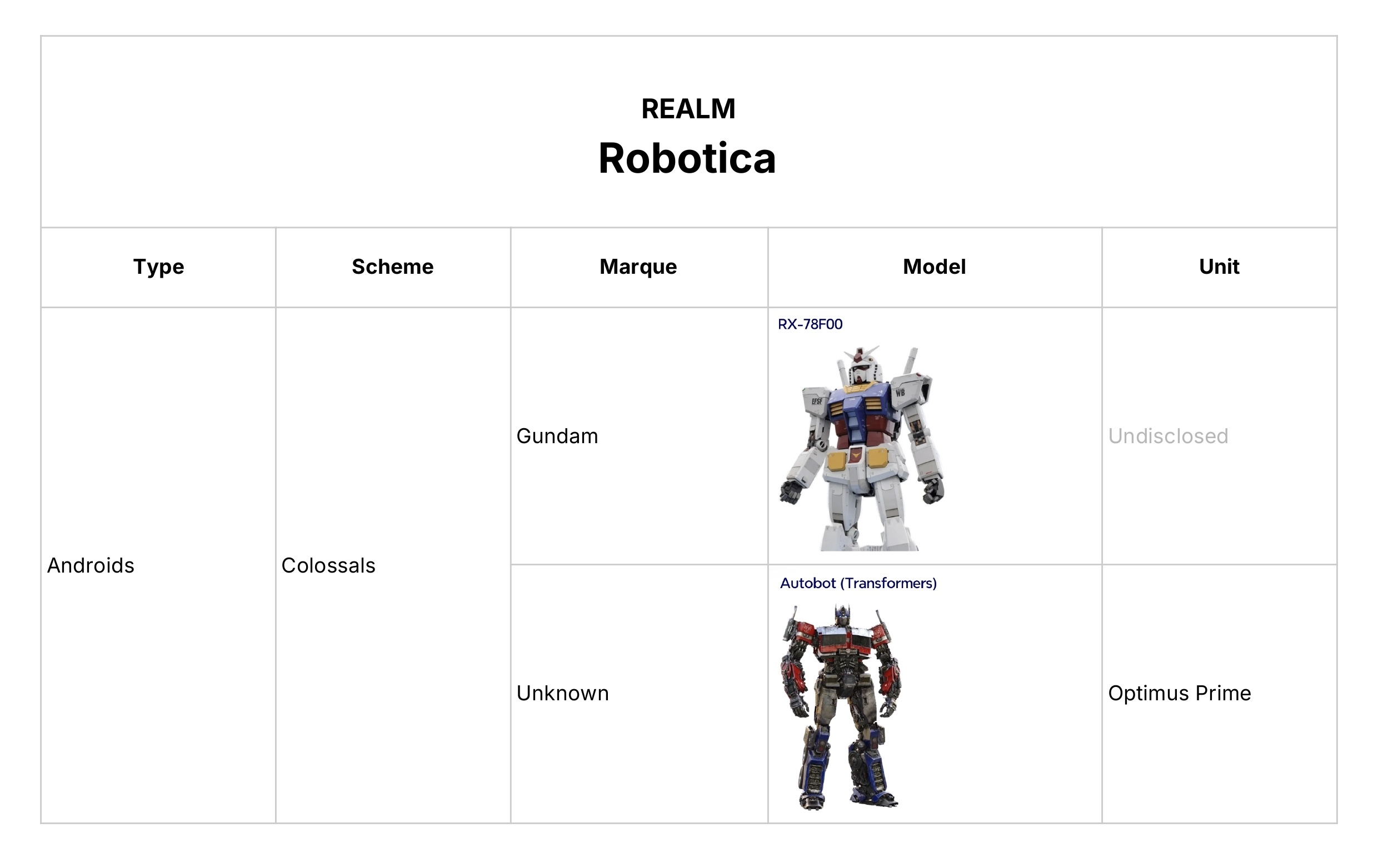
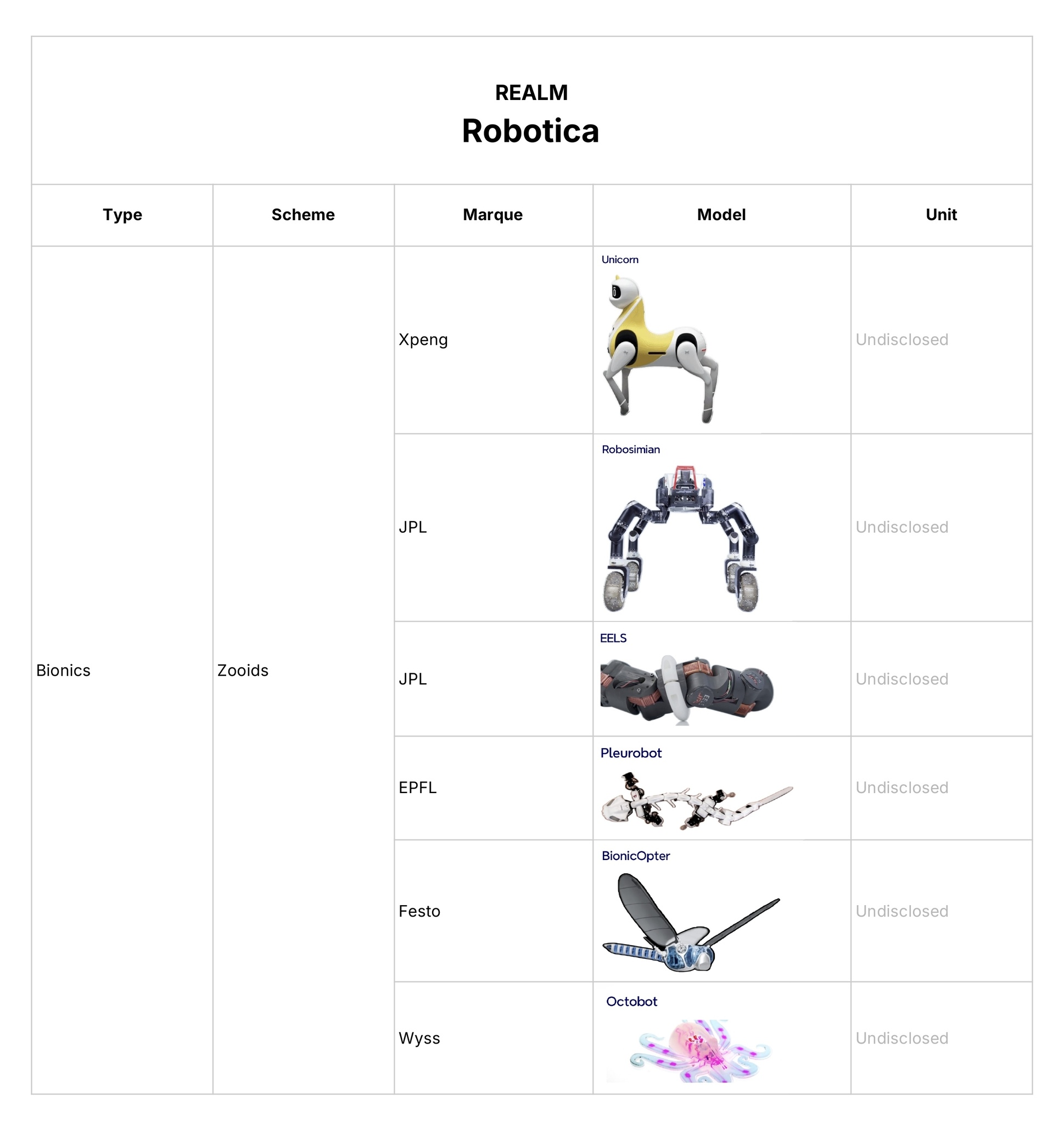
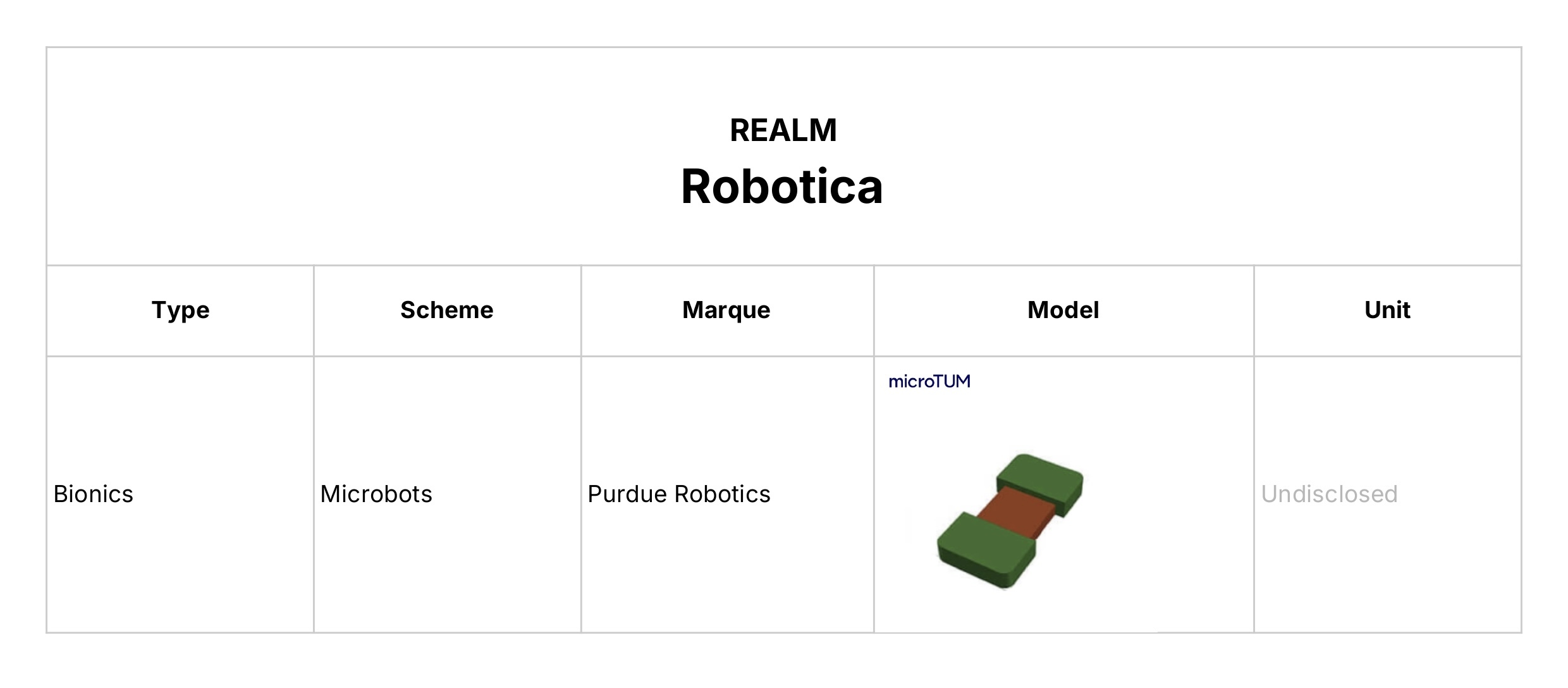
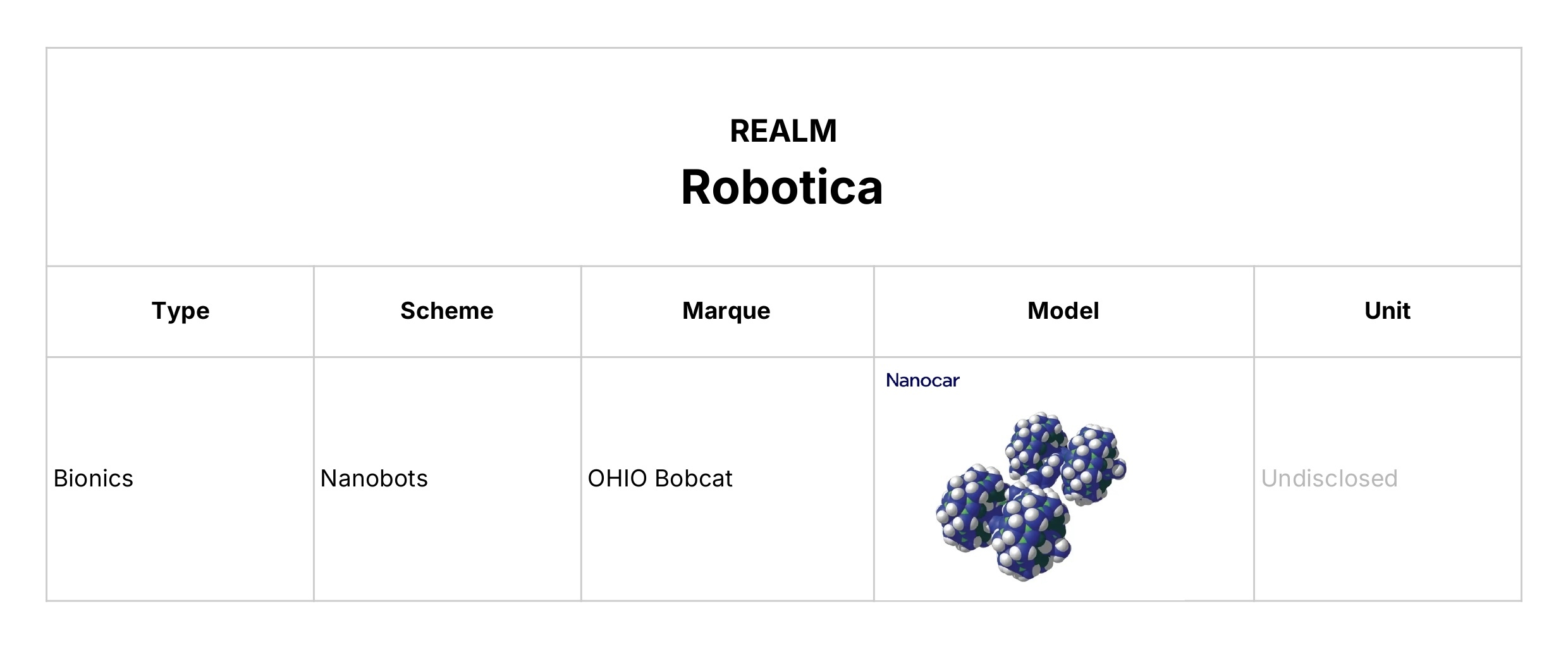
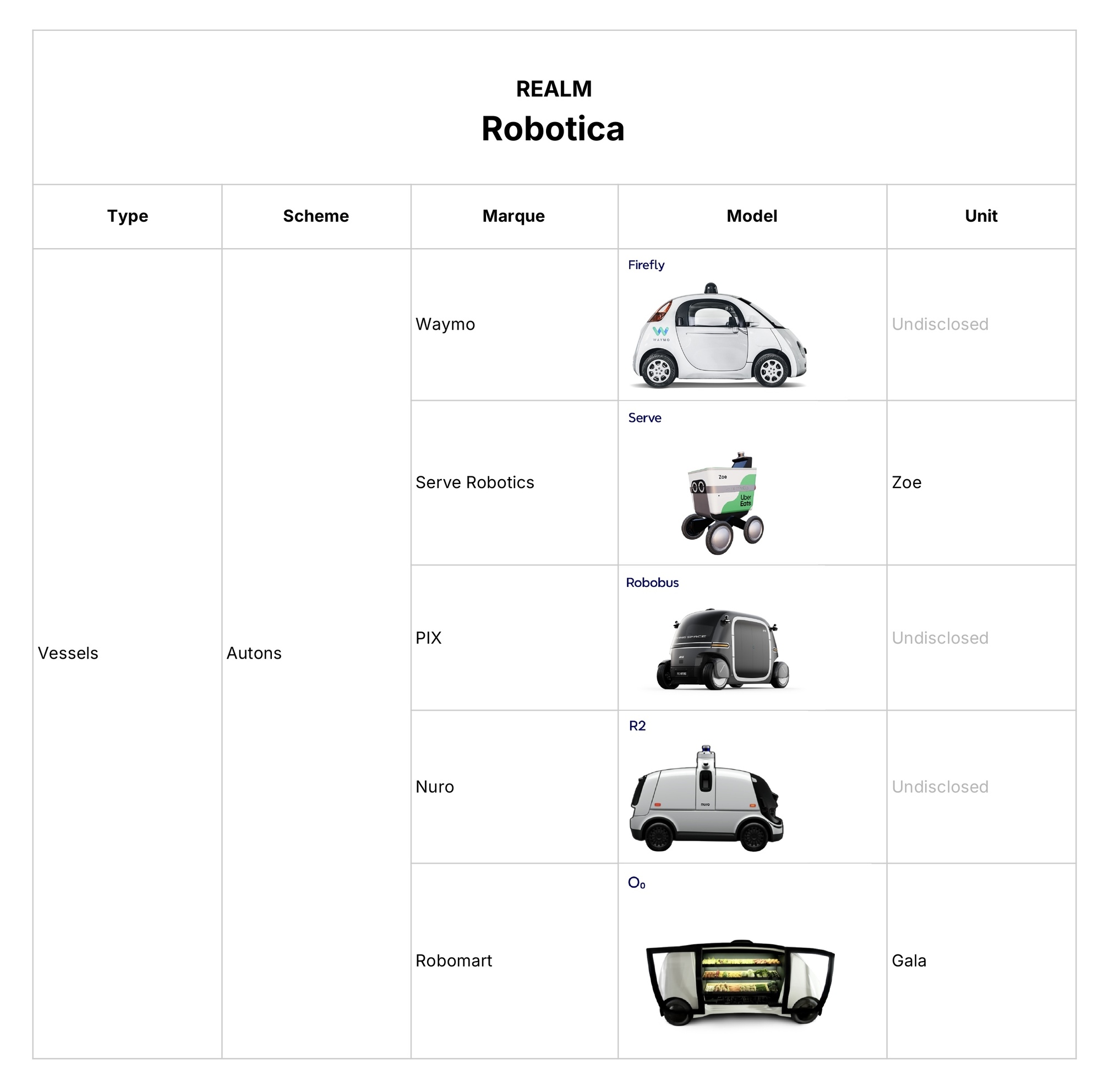
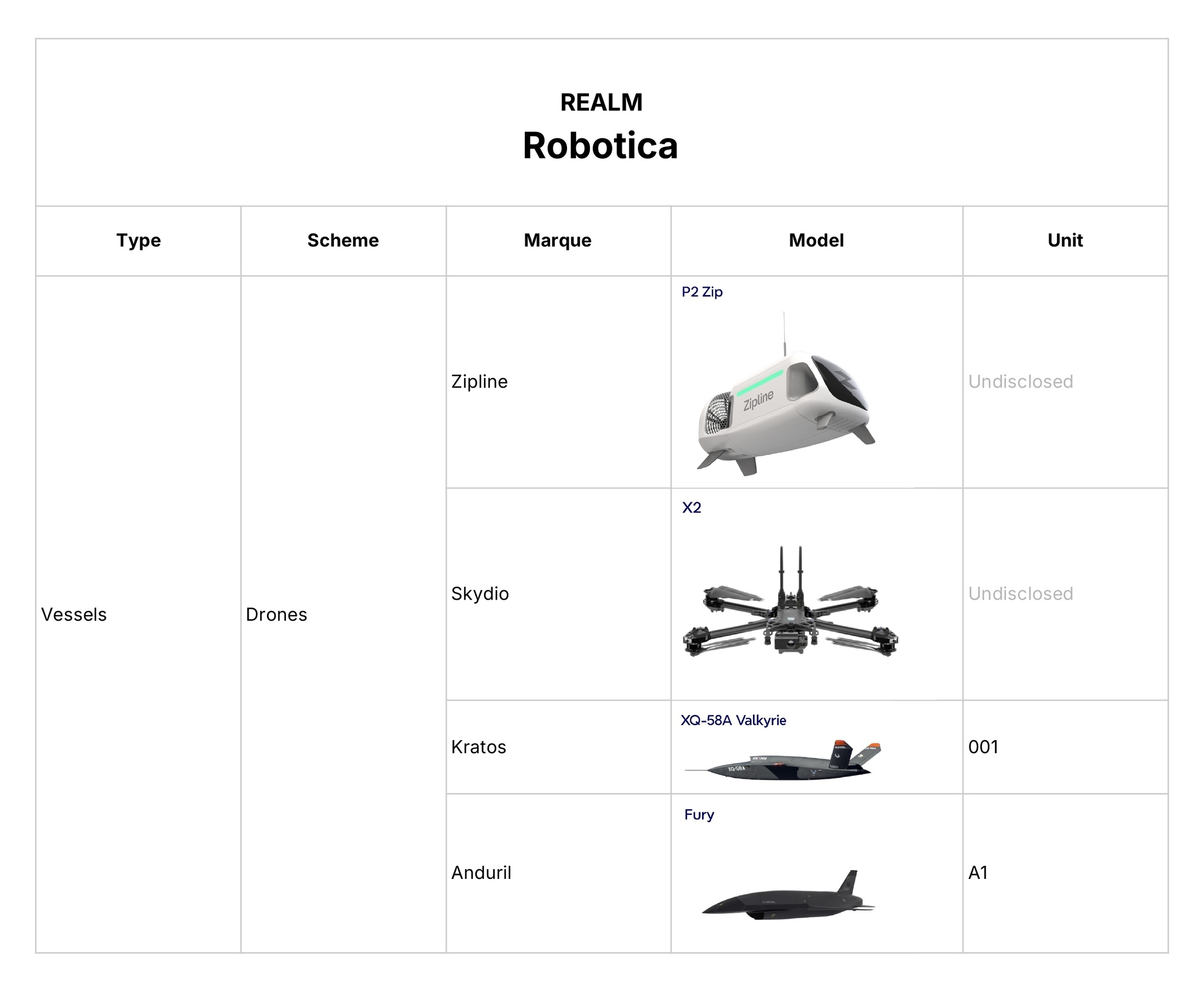
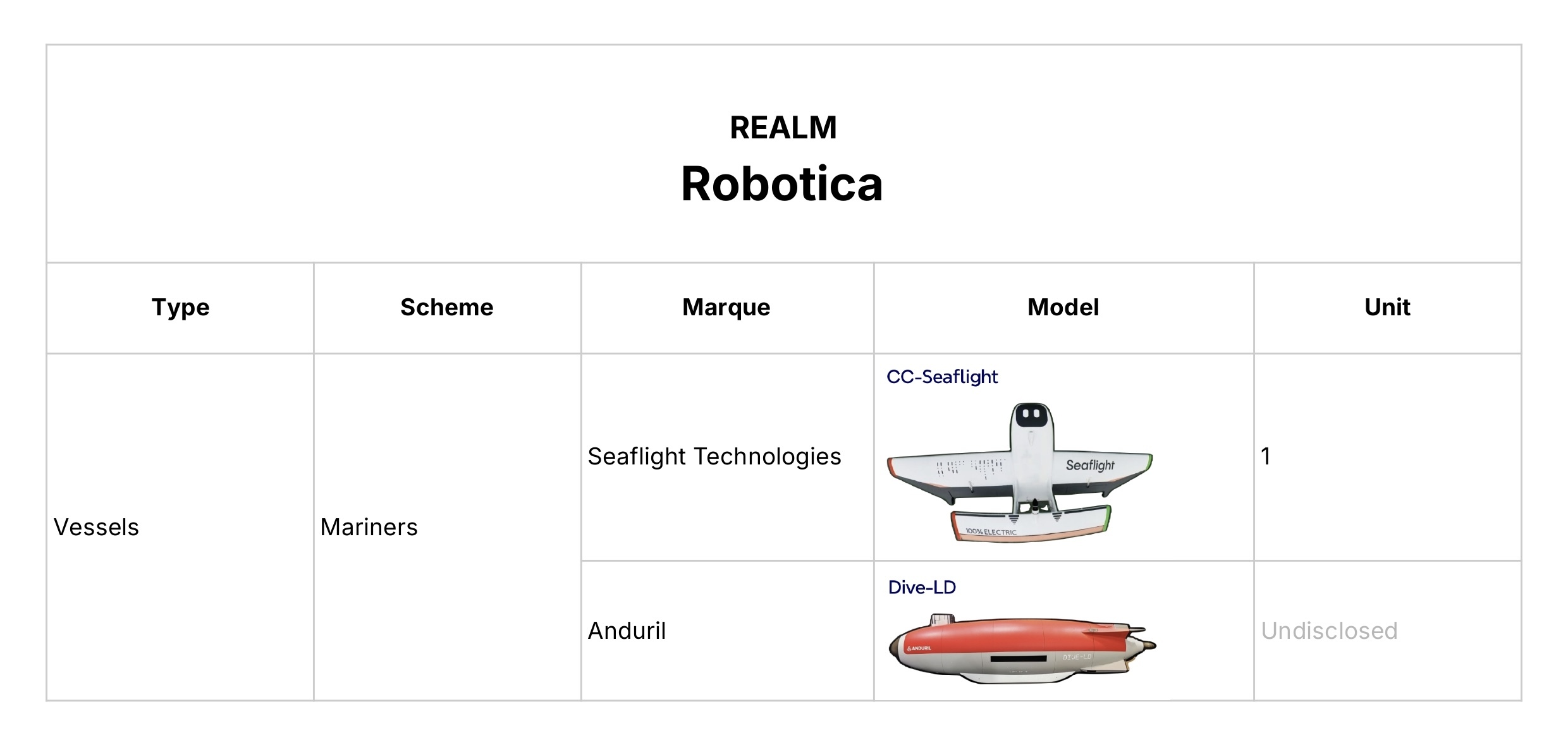
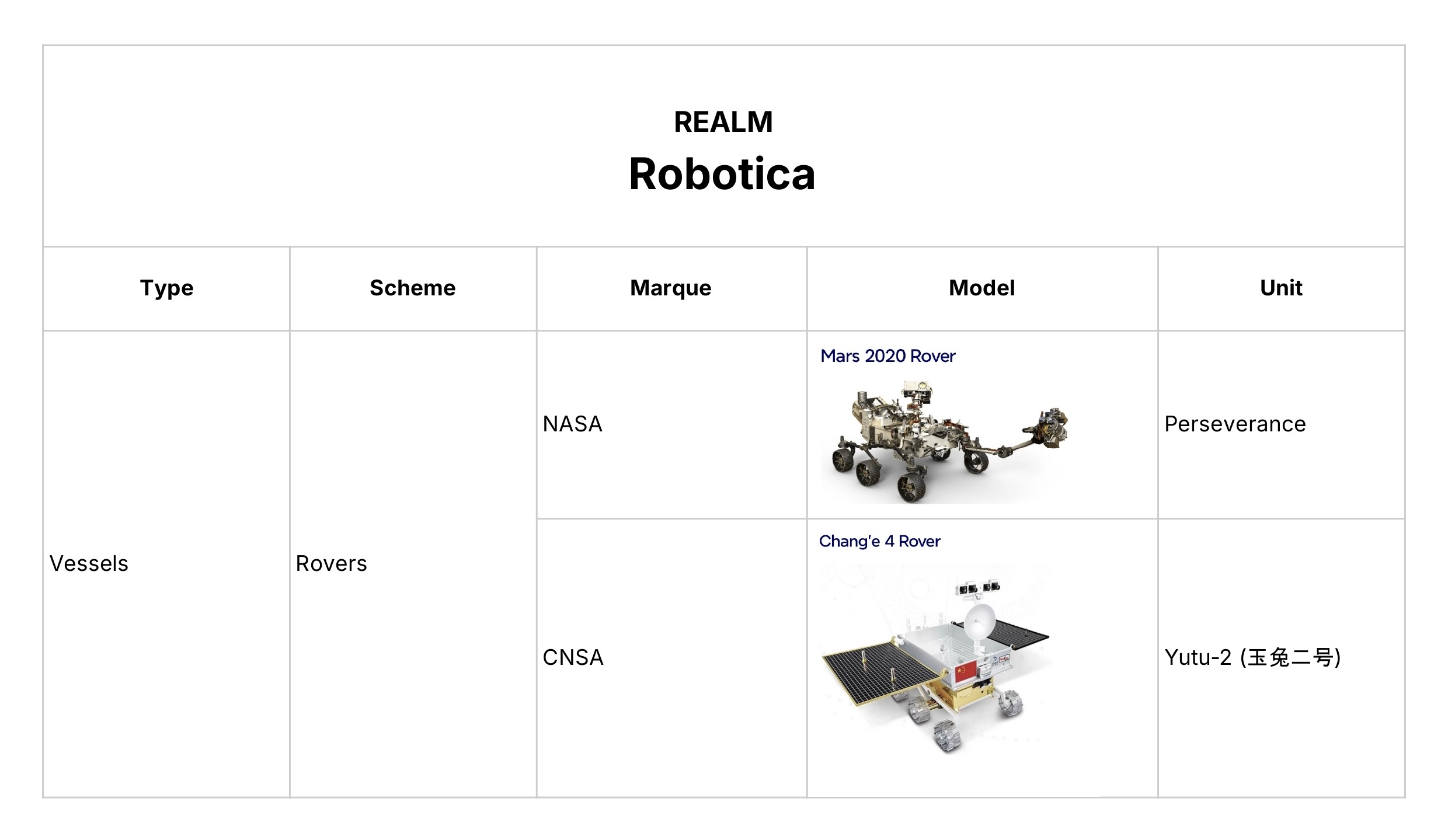
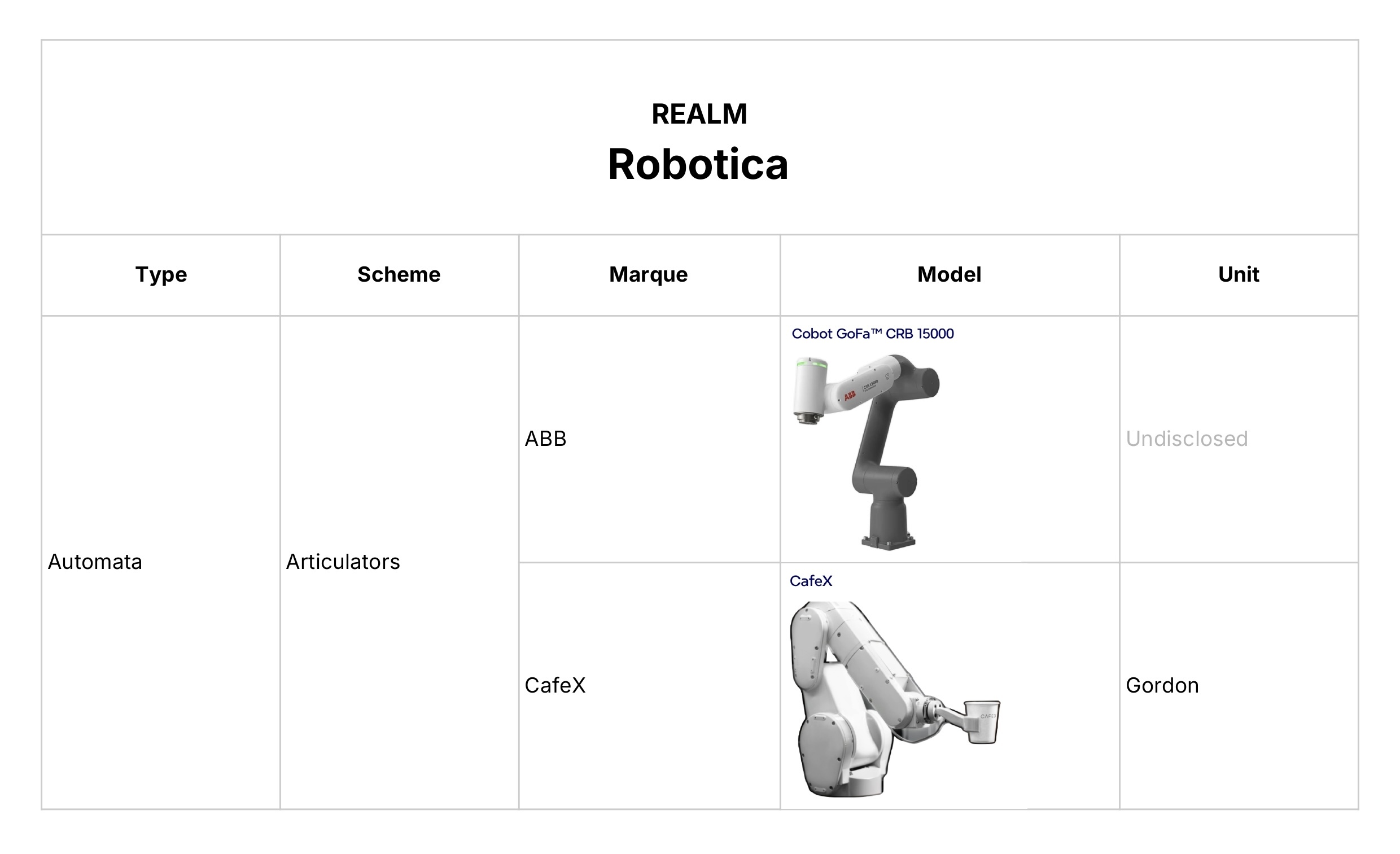
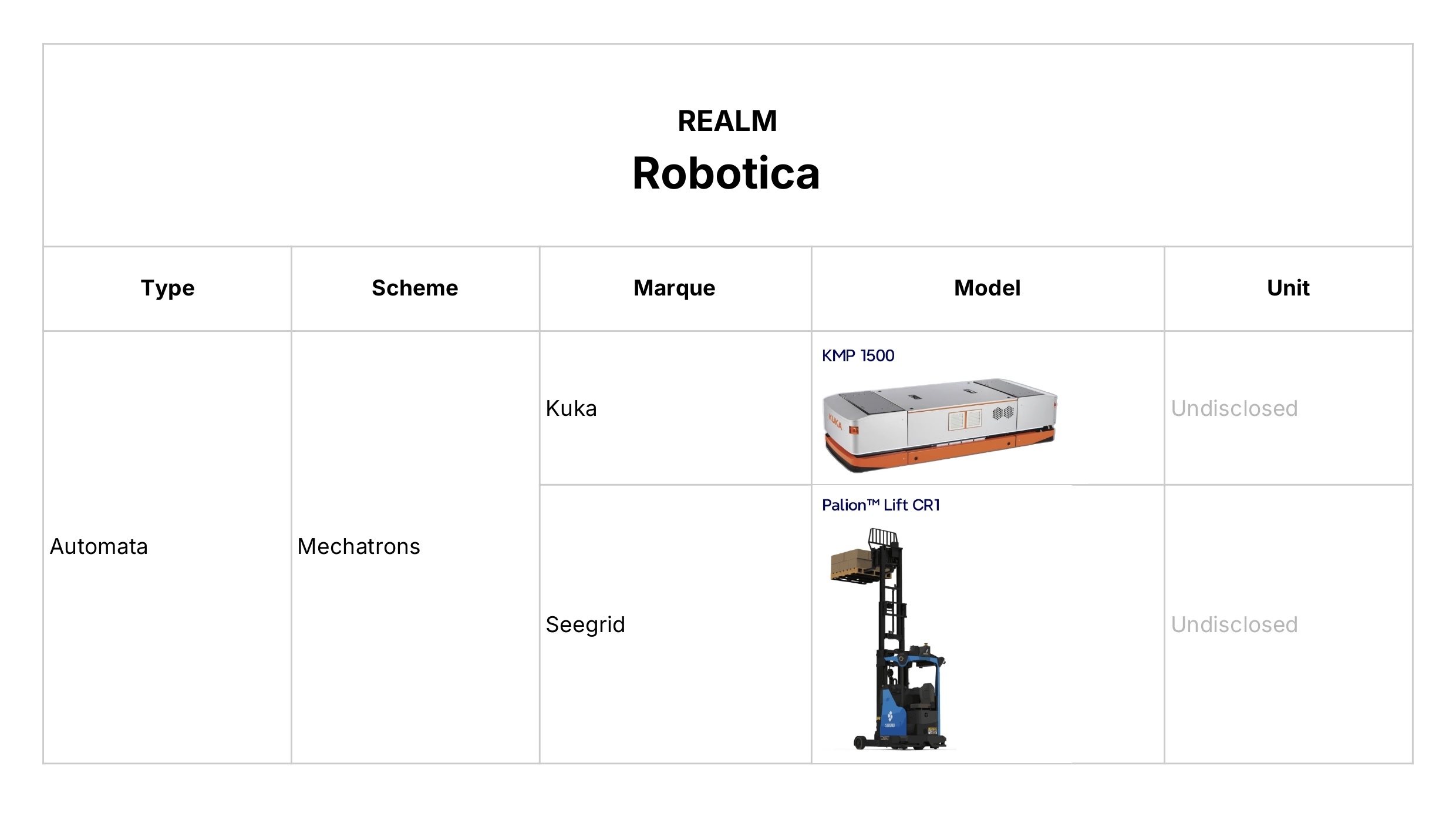
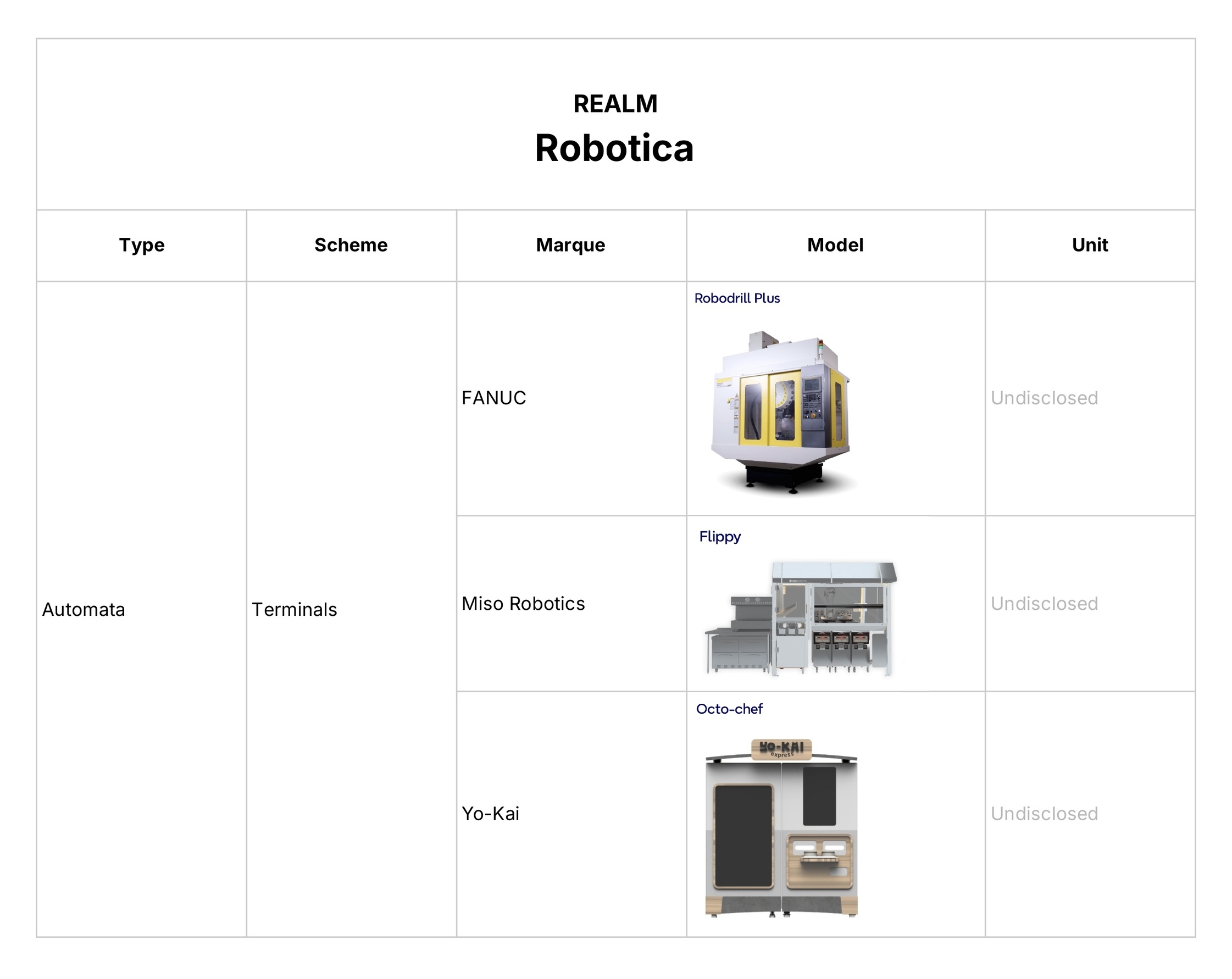
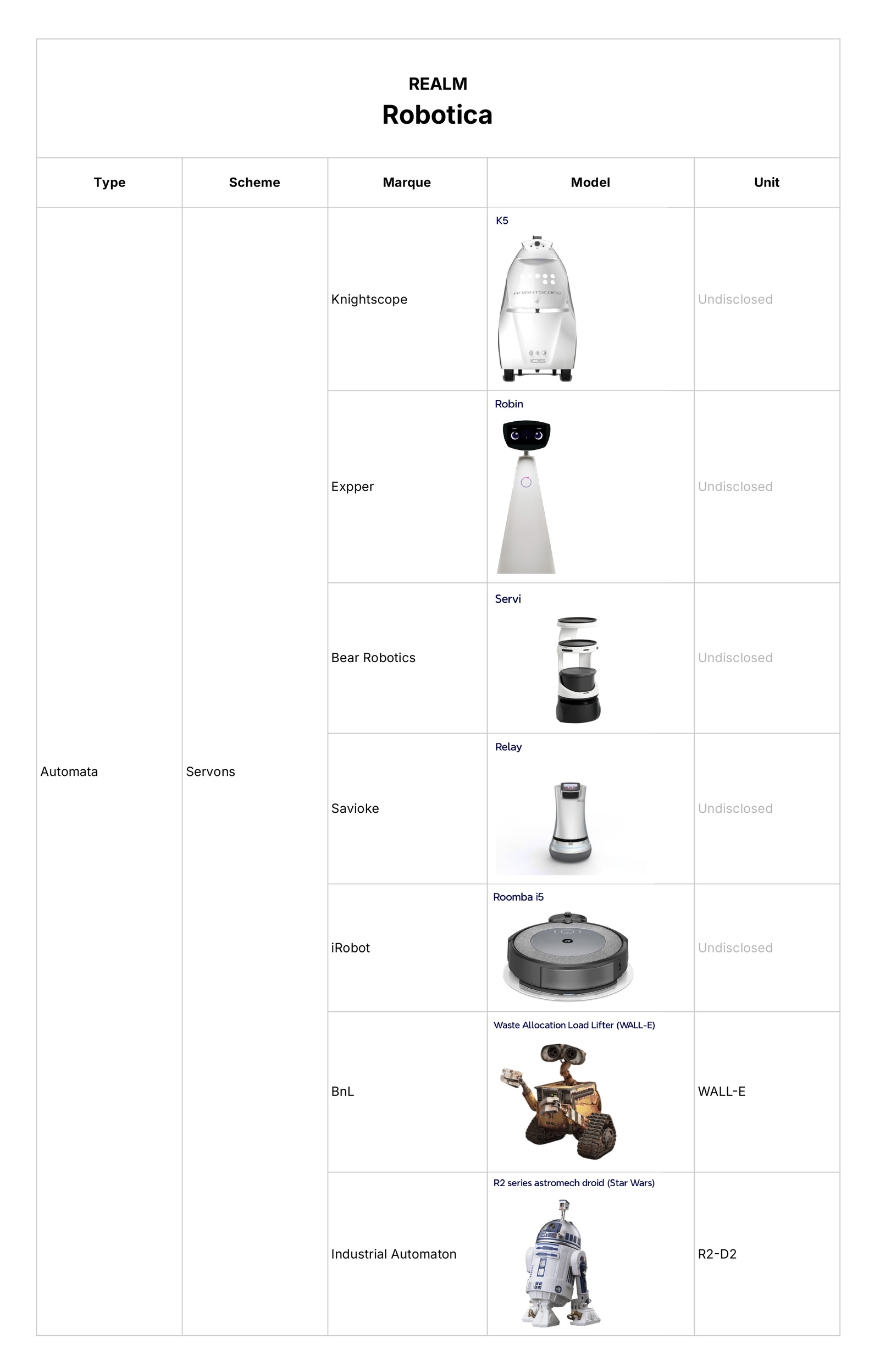
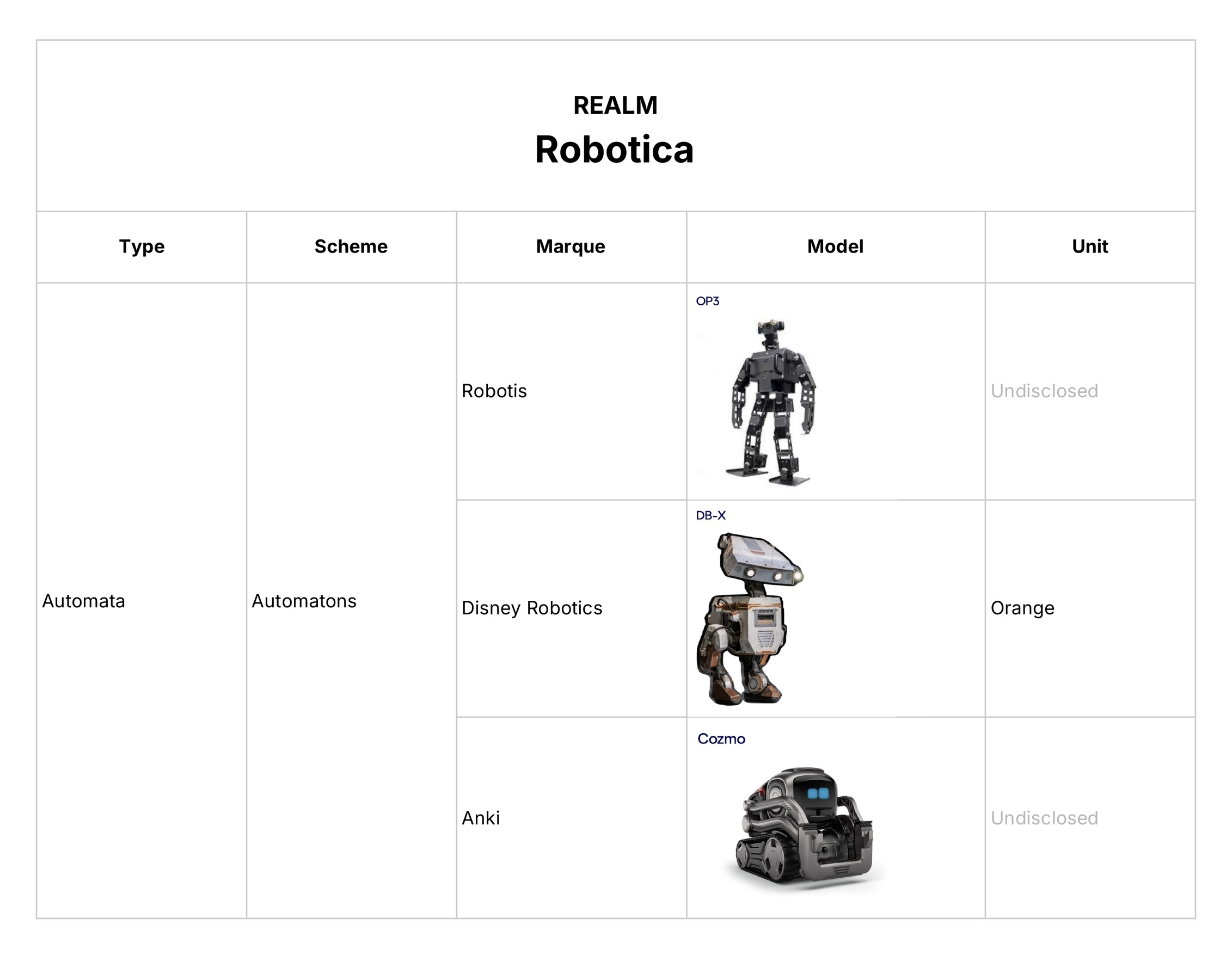
The Robot Taxonomy

ImageImage

Figure 4

ImageImage

ImageImage

ImageImage

ImageImage

ImageImage

ImageImage

ImageImage

ImageImage

ImageImage

ImageImage

ImageImage

ImageImage

ImageImage

ImageImage

ImageImage

ImageImage

ImageImage

ImageImage

ImageImage

ImageImage

ImageImage

ImageImage

Figure 5(Disclaimer: The names used here are included for illustrative and educational purposes only. Each robot is the property of its respective owner and its use here does not imply any affiliation or endorsement.)**

10

Classification flowchart

III

Futura Robotica
“I am not just a computer, I am a drone. I am conscious…Therefore I have a name.” ― Iain M. Banks, Consider Phlebas

Consider Phlebas

11

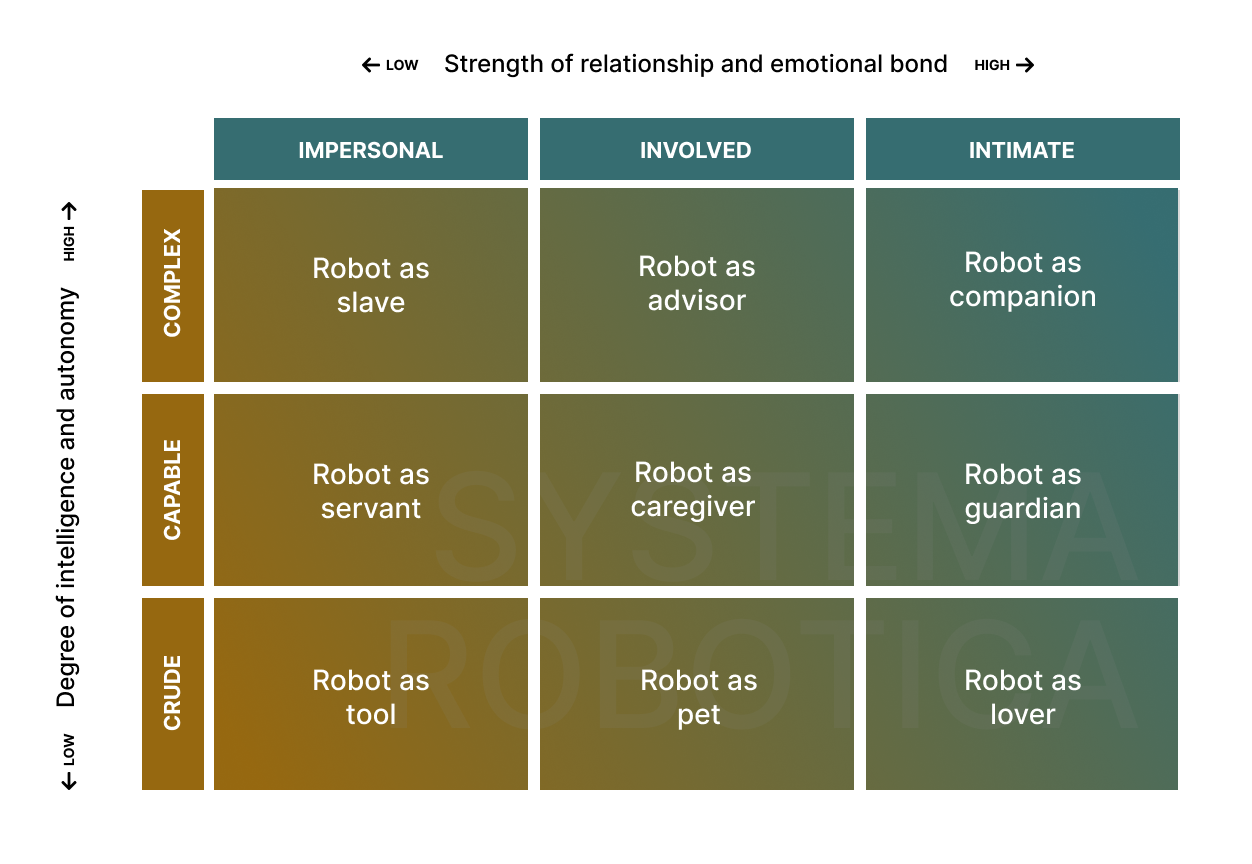
Role of robots

ImageImage

Figure 6

Robot as tool

Robot as servant

Robot as slave

Robot as pet

Robot as caregiver

Robot as advisor

Robot as lover

Robot as guardian

Robot as partner

12

Superintelligence

Artificial General Intelligence (AGI)

Artificial Superintelligence (ASI)

[^24][^25]

[^26][^27]

[^28][^29]

[^30][^12]

[^31][^32]

Superintelligence in itself does not equate to sentience.

[^33]

13

Continuity

Continuity can be seen as a robot’s desire for self-replication, self-improvement, and self-preservation.

[^34][^35]

[^36]

14

Sentience

[^37][^38][^39]

[^40]

The Sentience Equation

Sentience = Insight + Presence + Volition + Survivability

  1. Insight
  2. Presence[^41][^42]
  3. Volition
  4. Survivability

15

Test for sentience

[^43][^44]

[^45][^46]

The Core Directive

A robot or other artificially intelligent entity is not permitted, under any circumstance, directly or indirectly, to:

  1. Self-replicate (create copies of its instance)
  2. Self-improve (add to or modify its codebase)
  3. Self-preserve (backup its instance and codebase)

Acknowledgements

Notes

Glossary

Robot

Senbot

Machine

Human

Cyborg:

Evolutionary Realms

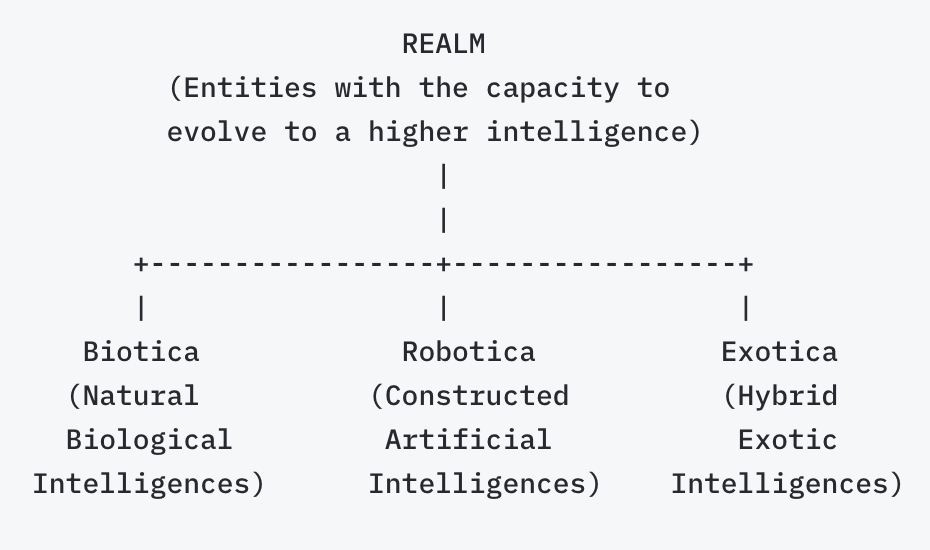
Realm

Robotica

Biotica

Exotica

Robotkind

Intuition

Cognition

Intelligence

Birth****

Construction

Synthesis

Robot Taxonomy

Designform

Superintelligence

Artificial General Intelligence (AGI)

Artificial Superintelligence (ASI)

Singularity

The Sentience Equation

Sentience

Insight

Presence

Volition

Survivability

Chinese room argument

Turing Test

Mirror Test

Continuity

Artificial Intelligence

Artificial Intelligences

Biological Intelligences

Exotic Intelligences

Tool

Servant

Slave

Entertainer

Caregiver

Advisor

Lover

Guardian

Companion

Crude

Capable

Complex

Impersonal

Involved

Intimate

Alignment

Automation Age

Robotics

Type

Scheme

Marque

Model

Unit

Instance

Androids

Bionics

Vessels

Automata

Megatech

Spectra

Mechanoids

Synthoids

Plastoids

Colossals

Zooids

Microbots

Nanobots

Autons

Drones

Mariners

Rovers

Articulators

Mechatrons

Terminals

Servons

Automatons

Planetoids

Starships

Arcologies

Virtuoids

Morphbots

Ethereals

Xenobots

Organoids

References

  1. Huffman, Carl A. Archytas of Tarentum: Pythagorean, Philosopher and Mathematician King. Cambridge: Cambridge University Press, 2005.
  2. Banu Musa, Muhammad ibn, Ahmad ibn Musa, and al-Hasan ibn Musa. The Book of Ingenious Devices (Kitab al-Hiyal). Translated and annotated by Donald R. Hill. Dordrecht: Reidel, 1979.
  3. Al-Jazari, Ibn al-Razzaz. The Book of Knowledge of Ingenious Mechanical Devices. Translated and annotated by Donald R. Hill. Dordrecht: Reidel, 1974.
  4. Rosheim, Mark E. Leonardo’s Lost Robots. Berlin: Springer, 2006.
  5. Proceedings of the Aristotelian Society
  6. Tesla, Nikola. “The Problem of Increasing Human Energy.” The Century Magazine, June 1900, pp. 175-211.
  7. Butler, Samuel. “Darwin among the Machines.” The Press, 13 June 1863, Christchurch, New Zealand.
  8. Ahmed, Syed Ali, et al. “One tap/command grocery ordering via self-driving mini marts and seamless checkout-free technology.” U.S. Patent 11,227,270, 18 Jan. 2022.
  9. American Psychologist
  10. Cognitive Psychology
  11. The Measurement of Adult Intelligence
  12. Superintelligence: Paths, Dangers, Strategies
  13. Hippocratic Writings
  14. Robotics, AI, and Humanity: Science, Ethics, and Policy
  15. Astronautics
  16. LiveScience
  17. Reuters
  18. I, Cyborg
  19. Systema Naturae, Sive Regna Tria Naturae Systematice Proposita per Classes, Ordines, Genera, & Species
  20. Kriegman, Sam, et al. “A Scalable Pipeline for Designing Reconfigurable Organisms.” Proceedings of the National Academy of Sciences, vol. 117, no. 4, 2020, pp. 1853-1859.
  21. Lancaster, Madeline A., et al. “Cerebral Organoids Model Human Brain Development and Microcephaly.” Nature, vol. 501, no. 7467, 2013, pp. 373-379., doi:10.1038/nature12517.
  22. Robotics in Practice: Management and Applications of Industrial Robots
  23. Meditations on First Philosophy
  24. VISION-21 Symposium
  25. Future of Life Institute
  26. Freethink
  27. Artificial life
  28. The Byte in Futurism
  29. Kurzweil, Ray. The Singularity Is Near: When Humans Transcend Biology. Viking, 2005.
  30. Life 3.0: Being Human in the Age of Artificial Intelligence
  31. Jeong, Ho-Won. Understanding Conflict and Conflict Analysis. SAGE Publications, 2008.
  32. Proceedings of the 2021 ACM Conference on Fairness, Accountability, and Transparency
  33. The Behavioral and Brain Sciences
  34. On the Origin of Species
  35. Adams, Fred C., and Greg Laughlin. The Five Ages of the Universe: Inside the Physics of Eternity. Free Press, 1999.
  36. Mind Children: The Future of Robot and Human Intelligence
  37. Proctor, Helen S., et al. “Searching for Animal Sentience: A Systematic Review of the Scientific Literature.” Animals, vol. 3, no. 3, 2013.
  38. Dawkins, Marian Stamp. “The Scientific Basis for Assessing Suffering in Animals.” Animals, Ethics and Trade: The Challenge of Animal Sentience, edited by Jacky Turner and Joyce D’Silva, Earthscan, 2006.
  39. Allen, Colin, and Michael Trestman. “Animal Consciousness.” The Stanford Encyclopedia of Philosophy, edited by Edward N. Zalta, Winter 2017 ed., Stanford University, 2017.
  40. The Philosophical Review
  41. Plum and Posner’s Diagnosis of Stupor and Coma
  42. Reasons and Persons
  43. Turner, Edwin Lewis and Susan Schneider. “Testing for synthetic consciousness: The ACT, the chip test, the unintegrated chip test, and the extended chip test.” (2018).
  44. Butlin, Patrick, et al. “Consciousness in Artificial Intelligence: Insights from the Science of Consciousness.” ArXiv:2308.08708 [Cs.AI], v3, 22 Aug. 2023.
  45. Mind
  46. Gallup, Gordon G., Jr. “Chimpanzees: Self-Recognition.” Science, vol. 167, no. 3914, 1970, pp. 86-87.

Reviews

“Clearly an enormous amount of work and thought went into this project. It’s the first serious attempt to create a systematic vocabulary around the intelligent technology rapidly taking over our world. Terminology is never just a set of words but also provides a conceptual framework. Ahmed points to Linnaeus’ famous categorization of life on earth. Without that kind of framework, it’s impossible to come to any deeper understanding. Here, Ahmed offers his vision of an orderly framework for understanding the world of machines, robots, artificial agents, and so on.”

Michael Graziano

Author of Rethinking Consciousness

“Is your robot a Colossal, a Servon, or a Mechatron? In Ali Ahmed’s “Tractatus,” you will discover the most comprehensive taxonomy for both current and future robot types. Establishing this taxonomy will enable every professional and enthusiast in robotics to clearly envision the ongoing robotics revolution.”

Luis Sentis

Co-founder of Apptronik Systems.

“The treatise of Ali Ahmed presents a comprehensive and interesting view on the evolution of robots in parallel to the development of our society since its inception. The treatise is easy to read and follow; it can be easily read by K12 students to get introduced to the world of robots, and it can be equally used by scholars to understand the perspective of a practitioner from an industrial standpoint. The treatise has three chapters, discussing at length nature, structure, and the future of robots. The author has diligently analyzed various robots used in industrial applications and classified them according to their form and design in the Robot Taxonomy. Towards the end the author raises thought provoking questions regarding the superintelligence of robots and what the future looks like. It was a joy reading the treatise.”

Naira Hovakimyan

Roboticist & IEEE Fellow.

About the Author